
Bespoke Torque Reaction Arms for Sports Car Manufacturer
Advanced Industrial Engineering Ltd were awarded a contract to design, manufacture, and commission a set of bespoke torque reaction arms.
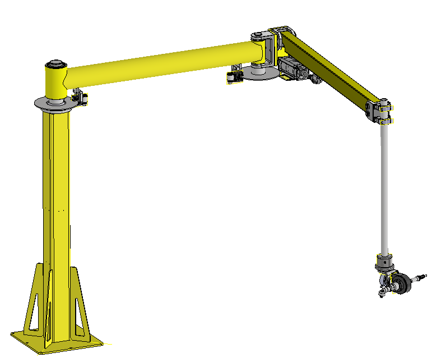
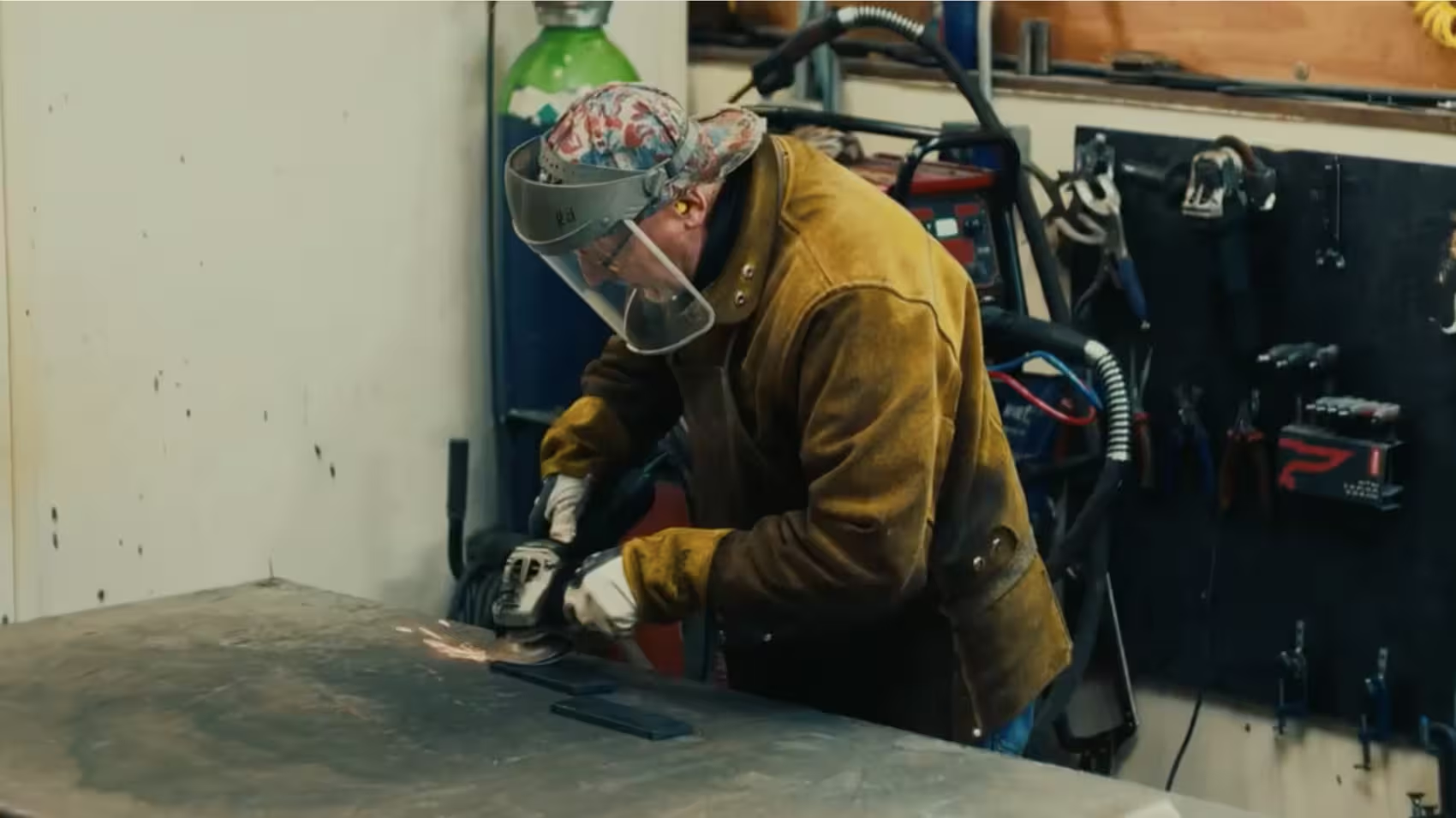
Overview
Advanced Industrial Engineering were approached by a luxury sports car manufacturer to quote for the supply of a set of torque reaction arms for its UK pilot plant.
The reaction arms were required to absorb torque reaction values up to 300Nm when tightening fixings on each vehicle during the customers assembly process.
The arms are required for tightening of all suspension and underbody critical fixings and as such required maximum flexibility and a reach of 4m.
The Advanced Industrial Engineering sales team reviewed the technical information provided by the customer and submitted a detailed technical proposal, including a 3D design concept and full cost breakdown.
Background
The customer was a luxury sports car manufacturer, who needed an assembly solution to support the build of one of its models.
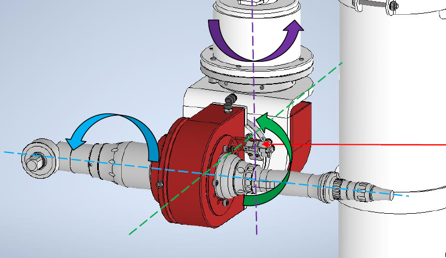
The solution needed to enable the assembly operator to access, then tighten fixings on all four sides and the underside of the vehicle. In addition, the tool holder needed to have 360 degree of rotation.
It was critical that the process could be achieved without interfering with any of the equipment in and around the assembly station. The assembly process and equipment had to be ergonomic for the assembly operator during use.
The customer provided a list of technical requirements within the RFQ that needed to be met, along with CAD files of the product and the assembly area where the reaction arm would be installed to aid the supplier when quoting.
Challenges, Constraints, and Success
The initial challenge on all projects starts with the information provided by the customer. Once received it needs to be thoroughly checked to ensure the project has a clear starting point. Often questions arise at this point ranging from… can the 3D CAD be opened? Is there sufficient information available to concept a solution to solve the customers challenge? Do we fully understand the customers requiements?
Control of documentation from customers is an important part of the process at AIE. When received the information is logged, key details such as CAD data issue dates and levels are recorded for reference.
Once the Advanced Industrial Engineering design and projects team are happy with the information, a design concept can be created, it then allows all parties to come together to review and discuss the solution.
Often this can lead to effective improvements of both the customers assembly process and/or the Advanced Industrial Engineering solution.
During this phase, changes can be made to the CAD design which is both quicker and more cost effective than physical changes to equipment.
On this project, the following specific questions needed answering early on within the project by the Advanced Industrial Engineering solution team:
• Was it possible to access all of the assembly fixings with the reaction arm and assembly tool?
• Were there any clashes between the reaction arm / tool and the product or any of the equipment within the station?
• Could the customers SOP (assembly process) be completed using the reaction arm / tool?
• Would the reaction arm design allow the operator to build the product ergonomically?
As part of the information provided by the customer, the DC assembly tool type and model were specified and free issued to Advanced Industrial Engineering . The reaction arm design would need to incorporate the nominated tool. The final design would need to be signed off by the tool supplier to ensure it would be used correctly.
Advanced Industrial Engineering now had to design a system to fulfil the requirements and incorporate the customer choice of tool. The reaction arm was required to absorb the high torque values needed to assemble the customers product.
The solution was based upon the equipment being always used and maintained correctly by the customer.
Success would be defined by delivering a solution that was both compliant and functional. The customers assembly operators needed to be fully trained and confident using the solution delivering a quality product every time.
Technical Approach / Methodology
Advanced Industrial Engineering approach is built around close customer involvement at every stage. Rather than developing a solution in isolation and presenting it for approval. Technical and Commercial discussions are kept open throughout the process, which means challenges surface early and decisions are made collaboratively.
The scope of supply quoted on this project by AIE covered 3 x Torque Reaction Arm solutions including all associated tooling.
The solution included:
• Full 3D and 2D design development using the customers technical information.
• Factory Acceptance Testing (FAT) at Advanced Industrial Engineerings facility with the customer present.
• Delivery, Installation, and Commissioning including a Site Acceptance Test (SAT) at the customer’s site
• On-site operator training
• Full certification with a comprehensive technical file supplied, inclusive of operator and maintenance instructions, TPM schedule, spare parts list, BOM,DRAs, DFMEA, load test certification, 3D STEP files, GA drawings, and safety guidance.
Every piece of equipment would be supplied and certified to the correct regulatory standards, with documentation complete before handover.
Implementation
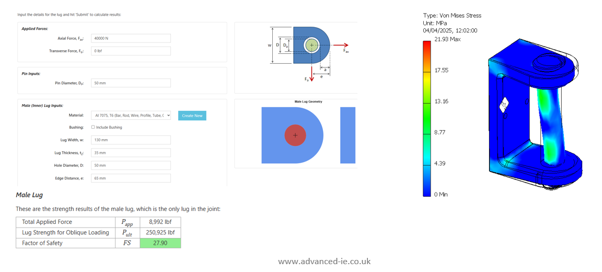
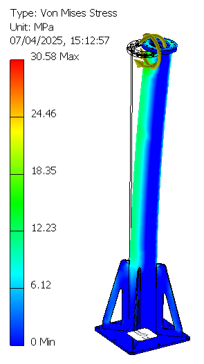
All safety critical components were subject to detailed Finite Element Analysis (FEA) before designs were finalised.
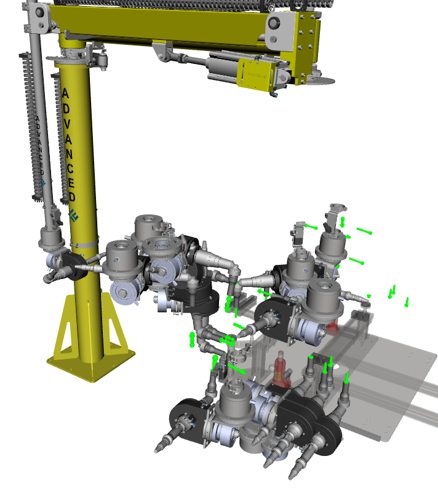
Part of the customer design review was a simulation of the DC assembly tool shown in position on each fixing. This confirmed access was achievable and ensuring no clashes were found. Any snags found during the review were documented and resolved prior to sign off by the customer.
Following a successful customer review and sign off Advanced Industrial Engineering then begin to procure bought out parts and manufacture bespoke components in-house.
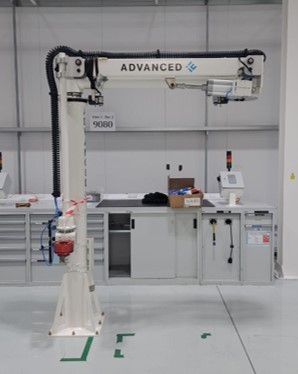
A prototype assembly was built and used for a full Factory Acceptance Test (FAT) at the Advanced Industrial Engineering workshop, attended by the customer. Any snags or refinements identified during the FAT were documented and then resolved before a pre delivery sign off. Once completed all three systems were finalised and prepared for shipment to the customers site.
The Advanced Industrial Engineering installation team, project managed the full commissioning process at the customers site, including a final Site Acceptance Test (SAT) confirming that the solution worked, all fixings could be achieved without any issues.
Conclusion
From initial concept through to on-site commissioning and training, Advanced Industrial Engineering managed every aspect of this project against tight operational constraints.
The customer received a fully certified, production ready solution, with comprehensive documentation from a supplier they could call on as the product and facility continue to evolve.
Lessons learnt
- This project interacted with several third-party facilities; one of which was the DC Tool supplier. Understanding these interactions in detail is key to ensuring a successful project by working with them, including them in decisions and ensuring how the equipment supplied is used correctly and signed off.
That is what a technical partnership looks like in practice.
From Concept to Commissioning.
Start Your Project Here.